
Dealing with a car insurance adjuster after an accident can feel stressful, especially when you are still processing what happened. These adjusters are trained professionals hired by insurance companies to assess damages, evaluate liability, and decide how much compensation you should receive. However, their goal is often to save money for the insurer, not to protect your rights. That is why understanding how insurance adjusters investigate claims and knowing what to say — and what to avoid — is crucial. When you learn how to negotiate with insurance adjuster representatives the right way, you can prevent lowball offers and protect your financial recovery from the start.
What Is the Role of a Car Insurance Adjuster After an Accident?

After every collision, the role of an insurance adjuster begins almost immediately. They contact you to gather facts, review documents, and start determining liability. Their primary goal is to figure out how much the insurer should pay based on your policy review and coverage limits.
In simple terms, the adjuster investigates who was at fault, examines damages, and proposes a settlement offer from the insurance company. However, they’re not neutral. They work for the insurer, not for you. Understanding their motives helps you prepare better for negotiations and avoid unfair outcomes.
How Insurance Adjusters Investigate and Evaluate Your Claim

To understand how insurance adjusters investigate claims, it’s helpful to know their methods. Typically, the adjuster reviews the police report, interviews witnesses, and inspects both vehicles. They also request photos, repair estimates, and medical documentation for claims involving injuries.
Once enough information is collected, they create a car accident liability assessment—essentially deciding who caused the crash. Based on that, they calculate a damage assessment and repair estimate and determine how much compensation you’ll receive. Knowing this process allows you to challenge mistakes or unfair evaluations.
What You Should Do Immediately After a Car Accident (Before Talking to Anyone)

Before speaking with any insurance representative, secure your own evidence. Take photographs of the vehicles, the scene, and any visible injuries. Exchange contact and insurance information with the other driver but avoid discussing fault.
Seek medical attention immediately—even if you feel fine. Some injuries surface later, and documented medical reports serve as strong evidence. Finally, contact your insurer only to notify them of the accident, not to provide detailed statements. Doing these things early ensures you stay in control of your insurance claim process.
What to Say — and What NOT to Say — to the Insurance Adjuster

When you finally talk to the adjuster, choose your words carefully. Stick to the basic facts—time, date, and location. Avoid admitting fault, estimating damage, or discussing medical issues. Adjusters often ask for recorded statements to the insurance company, but you are not legally required to give one without legal advice.
Never guess or speculate. If you don’t remember something, simply say so. Anything you say can be used to reduce your claim value. Remember, their questions are designed to collect information that protects the insurer’s interests, not yours.
Common Tricks Insurance Adjusters Use to Reduce Your Claim

Many policyholders fall for lowball settlement offer tactics. Adjusters may act overly sympathetic, claiming they just want to “close your file quickly.” They might offer an amount that seems fair at first but doesn’t cover future expenses like physical therapy or lost wages.
Another common trick is delaying communication so you feel pressured to accept a smaller payout. They may even misinterpret your words to shift partial blame onto you—affecting your determining fault in car accident outcome. Recognizing these tactics helps you stay confident and cautious.
.
How to Gather Strong Documentation and Evidence for Your Claim
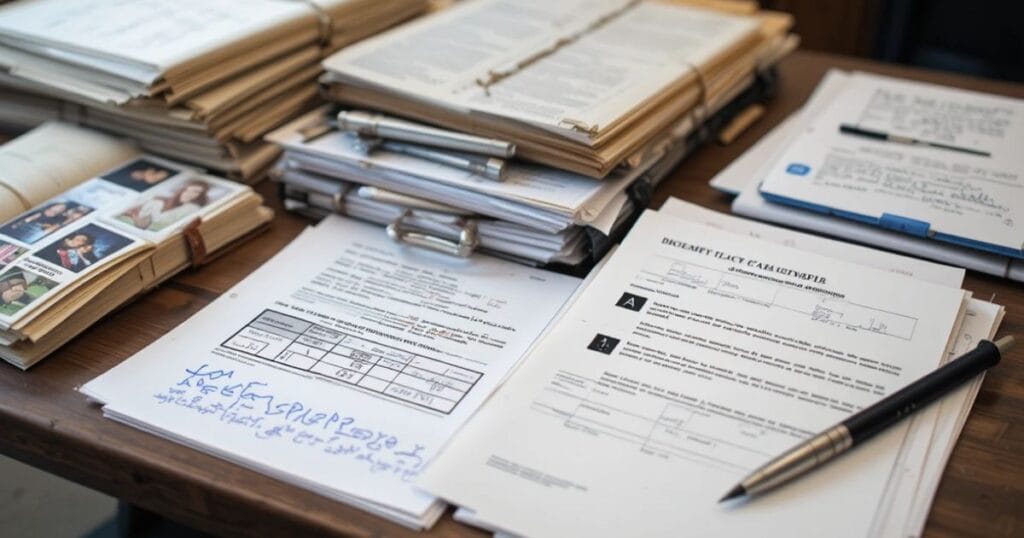
A successful claim depends on solid evidence. Gather all receipts, hospital bills, and photographs. Keep a written log of every conversation you have with the adjuster, including dates and summaries.
Use a simple chart like this to stay organized:
| Evidence Type | Why It Matters | Who Reviews It |
| Photos & Videos | Prove visual damage and accident scene | Adjuster & attorney |
| Police Report | Provides objective details of fault | Insurance company |
| Medical Bills & Records | Validate injury and treatment costs | Claims department |
| Repair Estimates | Support the damage assessment and repair estimate | Adjuster |
| Witness Statements | Strengthen your version of events | Legal team |
Having this organized makes it easier to counter false narratives during insurance claim settlement negotiation.
How to Communicate Professionally and Safely with the Adjuster

Always communicate with the insurance adjuster safely and professionally. Stay polite but firm. Don’t let emotions drive the conversation. Keep every exchange documented—emails, phone logs, and text messages.
Whenever possible, handle communication through your attorney. Communicating through an attorney ensures that all responses are legally sound and protects you from manipulation. This method also keeps you from accidentally sharing information that could weaken your case.
How to Negotiate a Fair Settlement with the Insurance Company
Negotiation is where most people lose money. When you negotiate with the insurance adjuster, you must be prepared. Begin by reviewing your damages—medical expenses, car repairs, lost income, and emotional suffering. Calculate a fair amount before accepting any offer.
If you receive a settlement offer from the insurance company that’s too low, reject it politely and provide evidence that supports a higher value. Sometimes it helps to send a demand letter to the insurance company detailing your losses and explaining why the offer isn’t sufficient..
Why You Should Avoid Sharing Medical or Personal Details Too Early

Sharing medical documentation for claims too early gives adjusters ammunition against you. If you send incomplete hospital records, they will argue your injuries are minor. If you delay treatment, they claim you were not actually hurt. Adjusters are not doctors — but they behave like skeptics who look for anything to question your pain, treatment, or recovery timeline. Even sharing unrelated medical history may allow them to blame your injuries on past conditions.
Never give full access to your medical history without legal guidance. Avoid describing how you “feel better today,” because they will claim you recovered fast and do not deserve future care money. Adjusters know injury symptoms evolve and worsen over time, so they push you early to minimize payouts. Protect your rights. Only release strategic medical information when absolutely necessary or when advised by a legal representation for insurance claims professional.
What Strategies Do Insurance Adjusters Use to Reduce Your Claim?
Insurance adjusters are trained to protect the insurance company’s profits — not your financial recovery. To do that, they often use tactics that seem polite and professional on the surface, but have one sneaky goal: to make you accept less money than you actually deserve.
Here are some common strategies adjusters use — and how you can protect yourself.
1. Acting Extremely Friendly to Lower Your Guard
Many adjusters will start the call sounding very kind, sympathetic, and “on your side.”
They may say things like:
- “I completely understand what you’re going through.”
- “Don’t worry — we’ll take care of everything.”
- “We just need a quick statement to move things forward.”
This is a psychological trick. If they gain your trust, you’re more likely to share extra information or admit fault without realizing it — which can kill your claim instantly.
Protection Tip:
Stay polite but professional. Stick only to facts. Never say things like “I think,” “maybe,” or “I’m sorry.” And never admit fault — even slightly.
2. Asking You for a “Quick Recorded Statement”
They will often request a recorded statement early — sometimes within hours of the accident.
They may say it’s “routine” or “just for accuracy” — but that is NOT true.
A recorded statement can legally be used against you. If you make even a tiny mistake, such as mixing up the timeline due to stress, they will use your own words to reduce or deny your claim.
Protection Tip:
Always respond with:
“I am not comfortable giving a recorded statement without legal guidance.”
This is 100% your right — and they cannot force you.
3. Offering a Fast & Very Low Settlement
An adjuster might say something like:
- “We want to help you quickly, so here’s an immediate offer.”
- “This is the maximum amount we are allowed to give.”
- “This is a fair estimate based on similar cases.”
This is known as a “lowball settlement trap.”
They know that you may be stressed, injured, or desperate for money — so they pressure you to accept before you even know the true value of medical bills, car repairs, or lost wages.
Protection Tip:
Never accept the first offer. Politely say:
“I am still assessing damages and waiting on estimates.”
More Common Tricks Insurance Adjusters Use to Weakening Your Claim
Adjusters don’t always deny your claim directly. Instead, they slowly weaken it using psychological, emotional, and legal pressure — hoping you will give up or accept less money.
Here are more powerful tactics they often use:
4. Delaying the Process to Make You Feel Desperate
Insurance companies know that delays cause stress. They hope that the longer they drag things out, the more financial pressure builds on you — pushing you to accept a lower settlement just to end the process.
They may say things like:
- “We’re still reviewing your paperwork.”
- “We need more documents.”
- “The process is taking longer than expected.”
- “Your case is still under evaluation.”
Sometimes, they even intentionally stop responding for days or weeks.
Protection Tip:
Legally keep the pressure on by sending follow-up emails (not just calls) so every delay is documented as evidence of bad faith.
5. Twisting Your Words — Even Innocent Ones
The adjuster will listen very carefully for anything that sounds like an admission of fault, even if it’s not.
Dangerous phrases you must NEVER say:
- “I’m sorry…” → (They will treat this as admitting fault.)
- “I think…” → (They will twist your uncertainty.)
- “I didn’t see them coming.” → (They will say you were not alert.)
- “I’m feeling better now.” → (They will reduce medical compensation.)
- “It wasn’t that bad…” → (They will downgrade your suffering.)
Protection Tip:
Only share confirmed facts, not assumptions or emotional comments.
6. Asking You to Sign “Standard Forms” That Are Actually Dangerous
Some of the most risky forms include:
- Blank medical release form → gives them access to your entire medical history (even old injuries).
- Premature settlement agreement → once signed, you cannot reopen the claim, even if injuries get worse later.
- Liability admission language hidden in “standard paperwork”
Protection Tip:
Never sign anything until you fully understand it — preferably after advice from a legal expert.
How Insurance Adjusters Secretly Investigate You (Online & In Real Life)
Most people don’t know this — but insurance companies actively investigate you after the accident to find reasons to deny or reduce your claim.
They may appear friendly, but behind the scenes, they carefully search for anything they can use against you.
Here are the most common surveillance tactics:
7. Monitoring Your Social Media Activity
Adjusters watch your Facebook, Instagram, TikTok, X (Twitter), and Snapchat.
They look for:
- Photos where you’re smiling, traveling, at an event, or moving normally
- Posts where you don’t mention pain or injury
- Stories showing gym, dancing, walking, or daily activity
- Even old posts that suggest a past injury
Protection Tip:
After the accident → Avoid posting anything. Even a “smiling selfie” can be used to prove you’re not in pain.
8. Physical Surveillance — Yes, They May Follow You
Insurance companies sometimes hire private investigators to follow you and record videos without you knowing.
They do this to prove you’re not as injured as you claim.
Example surveillance targets:
- Watching you walk to your car
- Checking if you carry groceries
- Filming you at work, gym, or park
- Observing how often you leave home
Protection Tip:
Always act carefully — even outside your home. Until your settlement is final, assume you are being watched.
9. Trying to Catch You in Inconsistent Statements
They will ask you the same questions multiple times — hoping you change even one small detail.
For example:
“Which direction was the other car coming from?”
They will ask you again weeks later to see if your answer slightly changes.
Protection Tip:
Give short, clear, consistent answers based only on facts — not memory guesses.
Why You Should Avoid Sharing Medical or Personal Details Too Early
One of the biggest mistakes accident victims make is sharing too much medical or personal information too early with the insurance adjuster after car accident. Adjusters pretend they need “details to help process your claim faster” — but the real goal is to find something to use against you.
10. They Use Old Medical History to Blame Your Pain on Previous Injuries
If you allow them full medical access, they will:
- Look for old back pain, gym injury, surgery, or any past accident
- Argue that your new pain is not caused by this accident
- Reduce or reject medical compensation completely
- Say “You were already injured before this accident”
Protection Tip:
Only provide limited & accident-related medical records, not your entire medical history.
11. They Try to Force You to Give a Recorded Statement Too Early
A recorded statement to insurance company may be used against you legally, even if you accidentally forget a detail or use the wrong words.
Dangerous mistakes people make in recorded statements:
- Guessing instead of stating facts
- Saying “I feel fine now” (they will use this to lower medical payout)
- Admitting confusion or uncertainty (“I think…” / “Maybe…”)
- Accepting partial fault without realizing
Protection Tip:
Politely say:
“I’ll provide written information later — after reviewing my medical report and speaking with legal counsel.”
How to Gather Strong Documentation and Evidence for Your Claim
Winning an insurance claim depends on evidence strength, not on how “convincing” you sound on a phone call. The insurance adjuster after car accident will try to question every detail, so having undeniable proof makes it nearly impossible for them to undervalue or reject your claim.
The first step is to collect physical and digital evidence immediately after the accident. This includes accident scene photos, police reports, driver statements, vehicle position, visible injuries, road conditions, and any witness information that supports determining fault in car accident before the other party tries to twist the story.
12. The Strongest Evidence That Confirms Liability and Damage
A powerful documentation package should include:
| Evidence Type | Why It Is Important |
| Police accident report | Strong proof for car accident liability assessment |
| Photos & videos from scene | Shows vehicle damage and road conditions |
| Medical reports & bills | Key medical documentation for claims |
| Repair cost estimates | Helps with damage assessment and repair estimate |
| Written witness statements | Extremely useful to protect your rights during insurance claim |
| Diagnostic & X-ray reports | Prevents insurer from claiming injuries are “minor” |
Reminder: Organize everything in Google Drive, PDF folders, or printed file sets before speaking to the adjuster — so you stay in control.
How to Communicate Professionally and Safely with the Adjuster
The moment you start speaking to a car insurance adjuster after car accident, you must act as if every word is being recorded and will be used against you — because in most cases, it will be. Staying calm, limited, and factual is the key to communicate with insurance adjuster safely without accidentally damaging your own case or allowing them to twist your statements later.
Never share emotions, guesses, or personal opinions. Avoid phrases like “I think,” “Maybe,” or “I’m sorry.” These sound harmless but may legally imply fault or weakness. The goal is to control the flow while staying polite, firm, and professional at all times — like someone who won’t fall for tricks or accept quick low offers.
13. Powerful Communication Rules You Must Follow
Here’s how to speak like someone who cannot be manipulated:
- Only speak about facts you are 100% sure of
- Never admit fault or apologize for anything
- Refuse recorded statements unless approved by your attorney
- Ask every question in writing — email is ideal
- If unsure, say:
“I’ll review that and get back to you.”
This calm and strategic communication style helps during insurance claim settlement negotiation and protects you from saying anything that could weaken your claim.
How to Negotiate a Fair Settlement with the Insurance Company
Negotiating with a car insurance adjuster after car accident is not about emotions — it’s about facts, financial damages, and legal leverage. The adjuster will begin with a lowball settlement offer hoping you panic and accept quickly. Never say yes to the first settlement offer from insurance company, because it is always below real value.
The strongest negotiations focus on numbers, documentation, and future damages — not just medical bills today. Mention lost income, ongoing treatment cost, impact on career or lifestyle, and even long-term emotional suffering. The more future loss you prove, the higher your claim value becomes.
Mistakes to Avoid That Can Lower or Destroy Your Compensation
One mistake can immediately reduce or destroy a strong claim. Many victims unknowingly weaken their own case by trusting adjusters too early or sharing information that helps the insurance company — instead of themselves.
People lose money when they post accident details on social media, sign medical release forms too soon, or accept blame before investigation ends. These actions give the adjuster legal ammunition to deny or minimize your compensation. Always protect your rights during insurance claim — not theirs.
When You Should Stop Talking and Let a Lawyer Handle Everything
There comes a point when speaking to the car insurance adjuster after car accident becomes risky — and that’s when you must immediately stop all communication and let a lawyer take over. If the adjuster questions your injuries, claims you were partially at fault, or starts delaying and asking for “further review,” — these are signals they are preparing to reduce or deny your payout.
A strong moment to involve a lawyer is when you sense the adjuster is using lowball settlement offer tactics, twisting your words, or pushing you to sign documents fast. The right decision at the right time can save you tens of thousands of dollars — and your attorney can speak for you, making it impossible for the adjuster to manipulate your answers.
How a Personal Injury Attorney Can Maximize Your Claim Value

A lawyer shifts the entire power structure of the case. The adjuster no longer sees you as a regular claimant — but as someone legally protected, difficult to exploit, and capable of forcing a higher payout in court if necessary. Attorneys instantly take control of the insurance claim process, perform car accident liability assessment, and gather expert-backed medical documentation for claims that are impossible to dispute.
An attorney will send demand letter to insurance company, negotiate professionally, and if required, trigger claim denial appeal process or formally request claim reassessment. This makes the insurer fear legal escalation, allowing your lawyer to push for maximum compensation — not the company’s lowest possible offer.
What Happens If You Disagree with the Adjuster’s Evaluation?
If the final insurance adjuster report is unfair — you are not stuck with it. You have the legal right to dispute insurance adjuster evaluation without accepting anything. Many people make the mistake of staying silent, which signals to the insurer that you are willing to accept the loss. Instead, you can request claim reassessment, submit stronger evidence, or have your attorney challenge every weak conclusion made by the adjuster.
This is a critical moment — because once you reject the first settlement offer from insurance company, you must avoid emotional replies and act strategically. A professional response led by a lawyer shows that you understand the insurance claim process and are willing to escalate if necessary — which instantly forces more careful handling by the insurer.
Final Expert Tips to Deal with Car Insurance Adjusters the Right Way
Always remember — the adjuster’s goal is to protect their company, not to protect you. Never forget that every answer you give, every document you share, and every delay in your response can affect determining fault in car accident and reduce your payout. Always negotiate with insurance adjuster, protect your rights during insurance claim, and communicate with insurance adjuster safely — preferably through legal representation for insurance claims.
If you take control early, avoid recorded statements to insurance company, follow policy review and coverage limits, and
Conclusion
Deal with Insurance Adjusters the Smart Way, Not the Hard Way
Dealing with a car insurance adjuster after car accident is not just about answering questions — it’s about protecting your financial future from the very first conversation. The adjuster is trained to reduce your payout, but when you understand their role of insurance adjuster, stay cautious, document every detail, and negotiate with insurance adjuster strategically, you gain full control of the insurance claim process — not them.
Never rush to accept the settlement offer from insurance company, never reveal too much, and let a lawyer take over the moment you sense manipulation. If needed, you can always dispute insurance adjuster evaluation, reassess insurance claim, or even legally escalate.
Your goal is not to “survive” the process — it is to win it. Stay informed, act with strategy, communicate with insurance adjuster safely, and don’t hesitate to seek legal backup. That is how you secure maximum compensation with confidence — not regret.
FAQS
| What should I never say to a car insurance adjuster? | Never admit fault, never guess what happened, and never discuss injuries or treatment before speaking to a lawyer. They can use it against you. |
| Can I refuse to give a recorded statement to the insurance company? | Yes. You are not legally required to give a recorded statement to the insurance adjuster unless your policy forces it — and even then, you should have a lawyer present. |
| How do I negotiate with an insurance adjuster for a higher settlement? | Provide strong evidence, medical documentation, expert estimates, and reject lowball offers confidently. A demand letter from an attorney is the strongest negotiation tool. |
| What if I disagree with the adjuster’s evaluation? | You can request a claim reassessment, submit new evidence, or have your attorney file an appeal or dispute — you are never forced to accept their first evaluation. |
| When should I stop talking to the insurance adjuster? | Stop immediately if they try to shift partial fault on you, ask tricky medical questions, delay without reason, or pressure you to settle quickly. Let a lawyer handle it from that point. |
| Can hiring a lawyer really increase my insurance payout? | Yes — attorneys know how to force fair compensation, send legal demand letters, challenge liability claims, and prevent the insurer from underpaying or delaying your settlement. |
| What not to say when talking to an insurance adjuster? | Never admit fault, guess what happened, or discuss your injuries or medical condition. |
| How to deal with an adjuster? | Stay calm, provide only basic facts, avoid opinions, and document every conversation. |
| What tactics do claim adjusters use? | They use lowball offers, recorded statement traps, and try to rush you into settling quickly. |
| How to prepare for an insurance adjuster? | Gather photos, police reports, medical documentation, repair estimates, and stay consistent with your story. |
| What is a reasonable settlement offer? | It should fairly cover medical bills, lost income, pain, and future damages — not just repair costs. |
| What questions should I ask a claims adjuster? | Ask about policy limits, claim timeline, required documents, and how to submit additional evidence. |
| How do I argue against an insurance claim? | Submit stronger evidence, request reassessment, and escalate through a lawyer if needed. |
| What are the 4 stages of the insurance claim process? | Report the claim → Investigation → Settlement negotiation → Final payout or appeal. |
Explore more Article
How to Deal with Insurance Adjuster (Complete Guide 2025)
How to Deal with Auto Insurance Claim Adjusters
How to Deal with Auto Insurance Claims Adjusters

Muhammad Maaz, founder of InjuyCrashGuide.com — sharing simple, real-life accident and insurance guidance to help people stay informed and protected.