
Riding a motorcycle feels liberating. The open road, the wind, and the control create an unmatched experience. However, behind that freedom lies a life-threatening risk that many riders underestimate. Motorcycle injury statistics consistently show that motorcyclists face far greater danger than drivers of enclosed vehicles. Studies show that when crashes happen, riders absorb the full force.
In the United States, statistics about motorcycle accidents reveal a sobering truth. Per mile traveled, motorcyclists experience a significantly higher motorcycle injury rate, higher motorcycle fatality rate, and more severe long-term consequences. These numbers are not opinions. They come from expert-reviewed data, official traffic safety reports, and evidence-based statistics compiled nationwide.
Overview of Motorcycle Injury Statistics
At first glance, motorcycle crash statistics seem alarming. Look closer and they become urgent. Unlike cars, motorcycles provide no external protection. This absence exposes riders directly to pavement, vehicles, and roadside objects. According to reports, this vulnerability is the leading reason behind elevated motorcycle accident risks.
Data collected by the National Highway Traffic Safety Administration (NHTSA) confirms that motorcycle collision data consistently shows higher injury severity. Even low-speed crashes often result in fractures, burns, or head trauma. Research indicates that motorcycle accident survival rate depends heavily on gear, speed, and immediate medical response.
Why Motorcycle Injuries Are More Severe Than Other Road Injuries
Motorcycles amplify physics. When a crash occurs, the rider becomes the crumple zone. This explains why motorcycle crash injuries often involve multiple body regions at once. Head-on collisions, rider ejection from motorcycle, and sliding impacts produce compound trauma.
Medical professionals note that serious motorcycle injuries frequently include traumatic brain injury (TBI), crushed limbs, and spinal cord injuries. The Mayo Clinic explains that even survivable crashes can cause permanent injuries that alter mobility and independence. These outcomes shape the broader economic cost of motorcycle accidents nationwide.
How Common Are Motorcycle Injuries Worldwide?
Globally, motorbike injury statistics reveal similar patterns. Where motorcycles dominate transport, injuries increase. In developed nations like the U.S., higher speeds worsen outcomes. Statistics on motorcycle accidents from Europe and Asia show fewer fatalities per crash due to stricter speed control and infrastructure.
In contrast, American riding culture emphasizes recreational travel. Seasonal motorcycle accident trends demonstrate sharp spikes during warmer months. Summer motorcycle accidents rise as leisure riding increases. According to reports, this seasonal exposure significantly raises the rate of motorcycle accidents in the U.S.
United States vs Global Injury Patterns
Comparative statistics of motorcycle accidents highlight a key distinction. The U.S. records fewer total crashes than some countries, yet experiences higher injury severity. Motorcycle danger statistics point to speed limits, highway usage, and mixed traffic patterns as core factors.
Data from the George Institute for Global Health suggests that helmet compliance and protective clothing reduce fatalities globally. Still, motorcycle safety statistics show inconsistent adoption across U.S. states. This inconsistency directly influences motorcycle crash rates and survival outcomes.
Motorcycle Injury Statistics by Year (Latest Data)
Year-by-year analysis reveals critical insight. Motorcycle accident trends show steady growth in injuries over the past decade. Research indicates a noticeable rise after 2020 as commuting habits changed and recreational riding surged.
Reports from Insurance Institute for Highway Safety (IIHS) confirm that injury totals climbed alongside motorcycle registrations. The percentage of motorcycle accidents resulting in hospitalization increased. These findings reflect behavioral changes, not vehicle design improvements.
Recent Year Snapshot: Injury Growth
The most recent motorcycle road accident statistics show tens of thousands of injuries annually in the U.S. Emergency departments report spikes during weekends and holidays. Weekend motorcycle crashes account for a disproportionate share of trauma admissions.
Nighttime motorcycle fatalities also increased. Reduced visibility, fatigue, and impaired driving converge after dark. Evidence-based statistics clearly connect time of day with injury severity.
How Many Motorcyclists Are Injured Each Year?

Every year, tens of thousands of riders sustain injuries serious enough to require medical care. Injury Facts reports that emergency rooms treat motorcyclists for fractures, internal injuries, and head trauma daily. Many cases require extended hospitalization.
Beyond immediate injuries, long-term care follows. Medical expenses after motorcycle crash often exceed those from car accidents. Traumatic injury recovery can take months or years, reducing earning capacity and independence.
Injury Volume and Healthcare Burden
Hospitals consistently report high costs associated with motorcycle trauma. Economic cost of motorcycle accidents includes surgery, rehabilitation, lost wages, and ongoing care. According to reports, these costs strain both families and healthcare systems.
The motorcycle accident percentage involving long-term disability remains high. Survivors often face chronic pain, mobility limits, and emotional distress. These outcomes explain why quality of life impact remains a central concern in injury analysis.
Early Indicators of Severe Injury
Medical responders identify patterns early. Single-vehicle motorcycle crashes often involve speed misjudgment. Multi-vehicle motorcycle crashes frequently stem from lack of visibility to drivers. Both scenarios elevate the likelihood of motorcycle accident resulting in severe harm.
Research indicates that riders have only seconds to react. At higher speeds, odds of crashing a motorcycle rise sharply. This reality underscores why injury statistics matter beyond curiosity.
Case Insight: A Typical U.S. Emergency Room Scenario
Trauma surgeons describe a common scene. A rider arrives after a motorcycle fall caused by sudden braking. Protective gear limits abrasions, yet internal injuries persist. Without rapid care, outcomes worsen quickly.
This scenario reflects broader motorcycle collision statistics nationwide. Studies show early intervention saves lives. Delay increases fatality risk. Numbers alone cannot capture the urgency felt in trauma bays across America.
Authoritative Sources Behind These Numbers
This analysis draws on National Highway Traffic Safety Administration (NHTSA), Insurance Institute for Highway Safety (IIHS), National Institutes of Health (NIH), Injury Facts, Mayo Clinic, Crash Stats, and Quote Wizard. Each source contributes statistically proven findings supported by decades of research.
These institutions rely on crash investigations, hospital records, and insurance data. Their work forms the backbone of statistics about motorcycle accidents used by policymakers, physicians, and safety experts nationwide.
Motorcycle Injury vs Car Accident Injury Statistics

When crashes happen, outcomes differ sharply. Motorcycle vs car accident statistics show that riders suffer injuries far more often than car occupants. Cars shield drivers with steel frames, airbags, and seatbelts. Motorcycles offer none of that protection.
Studies show that per mile traveled, the motorcycle injury rate is several times higher than cars. Motorcycle crash injuries often involve direct body impact. Motorcycle collision data confirms that even low-speed crashes can send riders to the hospital, while car occupants walk away.
The motorcycle accident survival rate also varies. Car crashes usually distribute force across the vehicle. Motorcycle crashes concentrate force on the rider’s body. According to reports, this difference explains the higher motorcycle accident deaths and long-term disability rates among riders.
The economic cost of motorcycle accidents reflects this reality. Medical bills, surgeries, and rehabilitation expenses far exceed those seen in standard car collisions, especially when permanent injuries occur.
Motorcycle Injury vs Bicycle Accident Statistics
At first glance, motorcycles and bicycles seem similar. Both lack enclosures. Yet statistics about motorcycle accidents show far worse outcomes for motorcycles. Speed plays the largest role.
Motorcycle crash statistics indicate higher impact energy. Motorbike injury statistics reveal more fractures, internal injuries, and head trauma than bicycle crashes. Research indicates that motorcycles magnify injury severity because collisions occur at highway speeds.
Urban areas highlight this contrast. Urban motorcycle accidents often involve traffic intersections and turning vehicles. Bicycles usually travel slower. Motorcycle crash rates climb rapidly when speed and traffic density intersect.
This comparison helps explain the probability of motorcycle accident resulting in hospitalization. The numbers show motorcycles create risk levels closer to cars colliding with pedestrians than bicycles colliding with vehicles.
Fatal vs Non-Fatal Motorcycle Injuries
Not all crashes end the same way. Fatal motorcycle accidents represent a smaller share of total crashes. Yet their impact is devastating. Motorcycle fatality rate remains high compared to other transport modes.
Motorcycle crash fatalities often involve head trauma, chest injuries, or internal bleeding. Traumatic brain injury (TBI) appears frequently in fatal cases. National Institutes of Health (NIH) research links rapid deceleration to irreversible brain damage.
Non-fatal injuries still carry heavy consequences. Survivors of serious motorcycle injuries may face lifelong pain. Spinal cord injuries can end careers and independence. Quality of life impact often outweighs the crash itself.
Evidence-based statistics show that many non-fatal cases require months of rehabilitation. These injuries reshape families, finances, and futures.
What the Numbers Reveal About Survival
Survival depends on variables. Speed matters. Gear matters. Medical response time matters. What percent of motorcycle crashes are fatal drops sharply when helmets and protective clothing are used.
Studies show riders wearing helmets experience better outcomes. Motorcycle helmet statistics demonstrate reduced fatal head trauma. Still, severe crashes overwhelm protection, especially during head-on collisions.
Most Common Types of Motorcycle Injuries
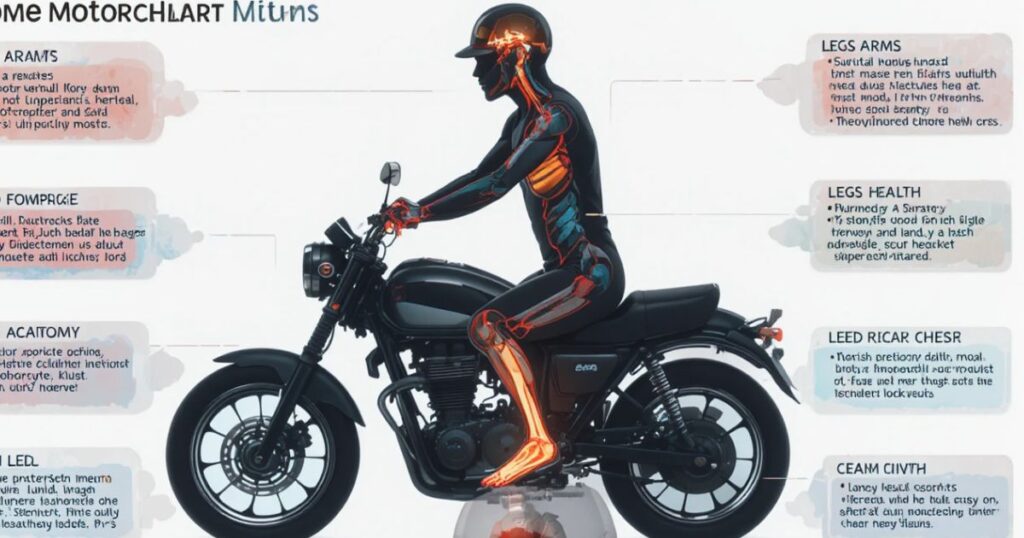
Hospitals see patterns repeat daily. The most common motorcycle injury includes fractures to arms and legs. Riders instinctively brace during falls. This reaction transfers force to limbs.
Motorcycle crash injuries also include road rash, internal organ damage, and chest trauma. Sliding across pavement causes severe skin loss. Fuel spills and post-collision fires add burn injuries in some crashes.
Doctors report that multi-system trauma is common. Rider ejection from motorcycle increases injury zones. A single crash may injure bones, organs, and the nervous system at once.
The Mayo Clinic confirms that multi-trauma cases raise complication risks and recovery time significantly.
Head Injury Statistics in Motorcycle Accidents
Head trauma defines motorcycle safety discussions. Motorcycle head injury statistics show that head injuries account for the majority of fatal outcomes. Even moderate impacts can cause irreversible damage.
What percentage of bike crashes result in head injury remains high without helmets. Certified motorcycle helmet use dramatically reduces skull fractures. Research indicates helmets absorb and disperse impact energy.
Yet helmets are not perfect. Fatal collision forces can exceed protection limits. Traumatic brain injury (TBI) may still occur through rotational forces. This explains why motorcycle accident deaths persist even among helmeted riders.
Motorcycle Injury Statistics by Body Part
Injury location follows physics. Legs contact first. Arms follow. The torso absorbs the final blow. Motorcycle injury statistics consistently show lower extremities injured most often.
Head and spine injuries cause the greatest harm. Spinal cord injuries often result in paralysis. Chest trauma compromises breathing and circulation. Serious motorcycle injuries frequently involve multiple body regions.
Emergency physicians emphasize early diagnosis. Immediate medical attention prevents complications. Delayed treatment worsens outcomes, especially with internal bleeding or brain swelling.
Table: Injury Distribution in Motorcycle Crashes
| Body Area | Injury Impact |
| Head | Highest fatality risk |
| Legs | Most frequent fractures |
| Arms | Common bracing injuries |
| Chest | Organ damage risk |
| Spine | Long-term disability |
This table reflects motorcycle collision statistics gathered from trauma centers and official traffic safety reports.
Why Motorcycle Injuries Often Become Permanent
Healing takes time. Some injuries never fully heal. Permanent injuries result from nerve damage, crushed joints, or spinal trauma. Traumatic injury recovery varies widely by severity.
According to reports, riders with spinal or brain injuries face lasting limitations. Quality of life impact includes chronic pain, reduced mobility, and emotional distress.
These outcomes explain why injury statistics matter beyond numbers. They represent altered lives.
Early Warning Signs of Severe Outcomes
Emergency teams monitor indicators closely. Loss of consciousness signals traumatic brain injury (TBI). Numbness suggests spinal cord injuries. Chest pain may hide internal bleeding.
Motorcycle crash stats show early intervention improves survival. Survival chances decline rapidly without prompt care.
Expert Perspective on Injury Patterns
Trauma specialists rely on expert-reviewed data to guide treatment. According to reports, injury severity increases with speed and impact angle. Side impacts and head-on collisions prove especially dangerous.
The Marine Corps Safety Center emphasizes training and gear as mitigation strategies. Their findings align with civilian motorcycle safety statistics nationwide.
Motorcycle Accident Causes and Crash Patterns
Understanding the motorcycle accident begins with knowing how and why crashes happen. Motorcycle accident causes are rarely random. Research indicates that most crashes follow repeated patterns seen in official traffic safety reports. Motorcycle crash causes often include head-on collisions, left-turn motorcycle accidents, and single-vehicle motorcycle crashes. In many cases, negligence of other drivers plays a major role, especially when cars fail to see motorcycles due to lack of visibility to drivers. These patterns appear again and again in statistics of motorcycle accidents collected across states and cities.
Studies show that multi-vehicle motorcycle crashes are more deadly than solo crashes. When a car hits a motorcycle, the rider absorbs most of the impact. This is why motorcycle collision statistics and motorcycle vs car accident statistics show much higher death and injury numbers for riders. According to reports from the National Highway Traffic Safety Administration (NHTSA), intersections are the most dangerous locations. Drivers turning left often misjudge speed. This leads to a fatal collision that could have been avoided with awareness and caution.
Speed, Alcohol, and High-Risk Behavior
Speed is one of the most dangerous motorcycle accident risk factors. Speeding motorcycle accidents reduce reaction time and increase impact force. Evidence-based statistics show that higher speeds sharply raise the motorcycle fatality rate. Riders traveling above posted limits are more likely to suffer serious motorcycle injuries or die instantly. Survival chances drop fast as speed increases, even with certified safety gear.
Alcohol is another major factor. Alcohol-impaired motorcycle riding affects balance, judgment, and vision. According to reports using blood alcohol concentration (BAC) testing, riders with illegal BAC levels face a life-threatening risk. Data from Crash Stats and Injury Facts confirms that alcohol is present in a large share of fatal motorcycle accidents. When speed and alcohol combine, the odds of crashing a motorcycle rise sharply, creating one of the most dangerous riding conditions possible.
Rider Error and Road Conditions
Not all crashes involve other vehicles. Rider error under cornering is a common cause of motorcycle fall incidents. Sharp turns taken too fast can cause loss of traction. Poor braking technique can also lead to crashes. Research indicates that newer riders face a higher probability of motorcycle accident due to limited experience. This explains why motorcycle crash rates are higher among inexperienced riders.
Road conditions matter just as much. Road hazards and negligence such as potholes, loose gravel, oil, or wet paint lines increase the rate of motorcycle accidents. Unlike cars, motorcycles rely on balance. Small hazards can cause major loss of control. Fuel spills and post-collision fires also raise the danger after impact. These risks appear often in motorcycle road accident statistics collected by safety agencies.
Injury Types and Medical Impact
The human body has little protection on a motorcycle. This explains why motorcycle crash injuries are often severe. Motorcycle injury statistics show that head injuries are the leading cause of death. Motorcycle head injury statistics reveal that many fatal cases involve riders without helmets. What percentage of bike crashes result in head injury remains high, even with helmets, but helmets greatly reduce severity. This is supported by expert-reviewed data from the Mayo Clinic and National Institutes of Health (NIH).
Other common injuries include broken bones, internal bleeding, and nerve damage. Spinal cord injuries can cause permanent paralysis. Traumatic brain injury (TBI) may lead to memory loss, mood changes, or long-term disability. Most common motorcycle injury types often require surgery and long recovery. These injuries have a lasting quality of life impact, affecting work, family, and mental health. Immediate medical attention is critical to reduce long-term damage.
Helmet Use and Protective Gear Statistics
Helmets save lives. This is not opinion. It is statistically proven. Motorcycle helmet statistics show that wearing a certified motorcycle helmet significantly lowers the motorcycle accident death rate. Studies show helmets reduce the risk of fatal head injury by a large margin. Motorcycle safety statistics from the Insurance Institute for Highway Safety (IIHS) strongly support helmet laws.
Protective clothing also matters. Protective riding gear such as jackets, gloves, and armored riding boots reduces injury severity. While gear cannot prevent crashes, it improves motorcycle accident survival rate. Riders wearing full gear experience fewer skin injuries and fractures. This improves recovery time and lowers medical expenses after motorcycle crash, according to official traffic safety reports.
Table: Injury Risk With and Without Safety Gear
| Safety Equipment Used | Head Injury Risk | Fatal Injury Risk | Recovery Outcome |
| No helmet, no gear | Very High | Very High | Poor |
| Helmet only | Medium | Reduced | Moderate |
| Full certified safety gear | Lower | Much Lower | Better |
Time, Location, and Seasonal Trends
Crash timing matters. Motorcycle accident trends show higher risk during certain periods. Weekend motorcycle crashes are more common due to leisure riding and alcohol use. Nighttime motorcycle fatalities increase because of low visibility and fatigue. These patterns are consistent across statistics about motorcycle accidents published nationwide.
Season also plays a role. Seasonal motorcycle accident trends reveal spikes in warmer months. Summer motorcycle accidents rise as more riders take to the roads. While riding feels safer in good weather, traffic volume increases. This raises the likelihood of motorcycle accident. Urban motorcycle accidents are especially frequent due to dense traffic and frequent intersections.
Economic and Legal Impact of Motorcycle Accidents
Beyond injuries, crashes bring heavy financial cost. The economic cost of motorcycle accidents includes hospital bills, lost income, rehabilitation, and long-term care. Permanent injuries can prevent a rider from returning to work. Families often struggle with sudden expenses and emotional stress. Research indicates these costs are higher than car accidents on average.
Legal support becomes important in such cases. A motorcycle accident lawyer helps victims navigate insurance claims for motorcycle accidents. Proper accident investigation is required to prove negligence of other drivers. Victims may seek compensation for motorcycle injuries, covering treatment and lost wages. Legal assistance for motorcycle accidents also supports a fair motorcycle injury claim when liability is disputed.
Motorcycle Accident Survival Rate and Fatality Odds

One of the most searched questions today is what are the odds of getting in a motorcycle accident. This concern is valid because motorcycle danger statistics show that riding carries a higher risk than driving. Statistics on motorcycle accidents clearly explain that motorcycles make up a smaller share of vehicles, yet they account for a much larger share of deaths. According to reports published in official traffic safety reports, the motorcycle accident survival rate depends on speed, helmet use, and crash type. Low-speed crashes with protective gear often lead to survival. High-speed impacts reduce survival sharply.
Another critical question is what are the odds of dying on a motorcycle. Evidence-based statistics from the National Highway Traffic Safety Administration (NHTSA) and Insurance Institute for Highway Safety (IIHS) show that motorcyclists are many times more likely to die per mile traveled than car occupants. What percent of motorcycle crashes are fatal varies by region and conditions, but the motorcycle fatality rate remains significantly higher than cars. This explains why motorcycle crash fatalities and motorcycle accident deaths receive constant attention in public safety discussions.
Table: Motorcycle vs Car Fatality Comparison
| Vehicle Type | Fatality Risk Per Mile | Injury Severity | Protection Level |
| Motorcycle | Very High | Severe | Low |
| Passenger Car | Much Lower | Moderate | High |
Injury or Death Percentages in Motorcycle Crashes
Many riders ask what percent of motorcycle accidents result in injury or death. Research indicates that most motorcycle crashes cause some level of injury. Motorcycle injury rate data shows that even minor falls often lead to fractures or road rash. What percent of motorcycle accidents result in injury or death remains far higher than for cars. This pattern appears consistently in motorcycle wreck statistics and motorcycle collision data.
Statistics about motorcycle accidents also answer what percentage of motorcyclists get into accidents during their riding lifetime. While not every rider crashes, the odds of motorcycle accident increase with mileage, age, and exposure. Chances of crashing a motorcycle rise in heavy traffic, poor weather, or unfamiliar roads. These realities explain why risk of motorcycle riding must always be taken seriously, even by experienced riders.
Case Study: Real-World Motorcycle Accident Scenario
A real-world example helps explain these risks clearly. In a recent incident reported in local news under motorcyclist killed Riverside today, a rider was struck at an intersection by a turning vehicle. The crash involved a left-turn motorcycle accident at moderate speed. Despite wearing a helmet, the rider suffered severe chest trauma and traumatic brain injury (TBI). Emergency response was fast, but injuries proved fatal. This tragic event reflects patterns seen in motorcycle crash statistics nationwide.
Accident investigation later showed driver error and poor visibility. This case highlights how negligence of other drivers contributes to fatal motorcycle accidents. It also shows how lack of visibility to drivers and intersection design increase danger. Such cases are frequently reviewed by the Marine Corps Safety Center and public agencies to improve accident prevention strategies.
Long-Term Health and Quality of Life Impact
Surviving a crash does not always mean full recovery. Serious motorcycle injuries often lead to long-term pain, disability, or emotional trauma. Spinal cord injuries may cause partial or total paralysis. Traumatic injury recovery can take years. Studies show that survivors often face depression, anxiety, and reduced independence. These effects create a lasting quality of life impact for victims and families.
The financial burden is also heavy. Medical expenses after motorcycle crash can reach extreme levels. Surgery, rehabilitation, and ongoing care raise the economic cost of motorcycle accidents. According to reports, many injured riders struggle even with insurance coverage. This is why insurance claims for motorcycle accidents often become complex and stressful without professional help.
Legal Rights and Compensation After a Motorcycle Accident

When another party is responsible, legal action becomes essential. A motorcycle accident lawyer helps injured riders understand their rights. Legal professionals assist with motorcycle injury claim filing and evidence collection. Proper documentation supports claims for compensation for motorcycle injuries, including medical bills and lost income. Legal assistance for motorcycle accidents also protects victims from unfair insurance practices.
Expert-reviewed data confirms that early legal guidance improves outcomes. Lawyers work with investigators to reconstruct crashes using motorcycle collision statistics and physical evidence. This process ensures accountability when negligence of other drivers caused harm. Without this support, many victims receive less compensation than they deserve.
Risk Reduction and Accident Prevention
Although risks exist, prevention is possible. Motorcycle safety stats show that training, gear, and awareness reduce crash severity. Wearing certified safety gear, especially a certified motorcycle helmet, lowers the chance of death. Avoiding speed and alcohol reduces motorcycle accident risks significantly. These steps are supported by statistically proven safety research.
Accident prevention also depends on infrastructure and driver awareness. Improved road design, better lighting, and education programs reduce motorcycle crash rate. Risk reduction is most effective when riders and drivers share responsibility. Research indicates that visible clothing, daytime headlights, and defensive riding techniques save lives.
Final Expert Conclusion
The data is clear and consistent. Staggering statistics show that motorcycles carry a higher danger than cars. Motorcycle crash stats confirm that speed, alcohol, and visibility are key factors. Motorcycle safety statistics also prove that helmets, gear, and training improve survival chances. Riding will always involve risk, but informed choices can reduce harm.
In the end, understanding motorcycle accident rates, percentage of motorcycle accidents, and injury outcomes empowers better decisions. Knowledge saves lives. Awareness protects families. Safety is not optional. It is essential.
FAQS
What percent of motorcycle accidents result in injury or death?
Studies show that a very high percentage of motorcycle accidents result in injury. Unlike cars, motorcycles offer no outer protection. According to reports from the National Highway Traffic Safety Administration (NHTSA), most crashes cause injuries, while a smaller but serious portion lead to death. This makes motorcycles one of the highest life-threatening risk vehicles on the road.
What are the odds of getting in a motorcycle accident?
The likelihood of motorcycle accident depends on how often you ride, where you ride, and how you ride. Research indicates that riders who travel more miles face higher exposure. Urban traffic, night riding, and speeding increase the probability of motorcycle accident. However, training and safety gear reduce risk.
What are the odds of dying on a motorcycle?
Evidence-based statistics show that motorcyclists are significantly more likely to die per mile traveled than car drivers. The motorcycle fatality rate rises sharply in high-speed crashes, alcohol-related incidents, and head-on collisions. Helmet use greatly improves survival chances.
What percentage of bike crashes result in head injury?
Motorcycle head injury statistics reveal that head injuries are among the most common and deadly outcomes. According to official traffic safety reports, riders without helmets face a much higher risk of traumatic brain injury (TBI). A certified motorcycle helmet dramatically lowers this risk.
Are motorcycle injuries usually severe?
Many motorcycle crash injuries are serious because riders are exposed. Common outcomes include fractures, road rash, internal injuries, and spinal cord injuries. Serious motorcycle injuries often require long recovery periods and may cause permanent limitations.
Is riding a motorcycle more dangerous than driving a car?
Yes. Motorcycle vs car accident statistics consistently show that motorcycles have higher injury and death rates. Cars protect occupants with airbags, seat belts, and steel frames. Motorcycles rely mostly on rider skill and protective gear.
Can motorcycle accidents be prevented?
While not all crashes are avoidable, accident prevention is possible. Wearing protective riding gear, avoiding alcohol, managing speed, and staying visible reduce risk. Motorcycle safety statistics confirm that trained and alert riders crash less often and survive more crashes.
When should someone contact a motorcycle accident lawyer?
You should contact a motorcycle accident lawyer if injuries are serious, another driver was at fault, or insurance companies delay payment. Legal support helps with motorcycle injury claims, insurance claims for motorcycle accidents, and fair compensation for motorcycle injuries.
What is the #1 cause of motorcycle accidents?
The #1 cause of motorcycle accidents is left-turn collisions, where another vehicle turns in front of a motorcycle. According to traffic safety reports, driver failure to notice motorcycles leads to many fatal motorcycle accidents in the United States.
Do 80% of motorcycle accidents result in death?
No, 80% of motorcycle accidents do not result in death. However, motorcycle crash fatalities occur at a much higher rate than car crashes due to limited protection, making the motorcycle fatality rate significantly higher per mile traveled.
What is the most common injury in motorcycle accidents?
The most common motorcycle injury involves head injuries, including traumatic brain injury (TBI). Motorcycle head injury statistics show that riders without helmets face a far greater risk of life-threatening trauma.
What percentage of motorcycle riders get hurt?
Studies show that around 70–75% of motorcycle accidents result in injury or death, highlighting the high motorcycle injury rate and overall risk of motorcycle riding compared to other vehicles.
What kills motorcyclists?
The leading causes of death include head trauma, speeding motorcycle accidents, alcohol-impaired motorcycle riding, and head-on collisions. Motorcycle accident deaths often occur due to severe impact and rider ejection.
What is the 4 second rule for motorcycles?
The 4-second rule for motorcycles means keeping at least four seconds of following distance behind other vehicles. This rule improves reaction time and reduces the likelihood of a motorcycle accident, especially at higher speeds.
Disclaimer
This blog is published for informational and educational purposes only. The content is based on expert-reviewed data, official traffic safety reports, and publicly available research from sources such as the National Highway Traffic Safety Administration (NHTSA), Insurance Institute for Highway Safety (IIHS), National Institutes of Health (NIH), and Mayo Clinic.
This article does not provide medical, legal, or professional advice. Motorcycle laws, injury outcomes, and accident risks vary by state and situation. Readers should not rely on this information as a substitute for professional guidance.
If you have been involved in a motorcycle accident, seek immediate medical attention and consult a qualified medical professional or a licensed motorcycle accident lawyer for advice specific to your situation.
Author: Muhammad Maaz
Article Type: Informational Blog
Purpose: Awareness, safety education, and public knowledge
Common Hand and Wrist Injuries from Motorcycle Accidents

Common hand and wrist injuries from motorcycle accidents are among the most frequently treated injuries in emergency rooms across the United States. When a motorcycle crash occurs, riders are often thrown from the bike, and the hands and wrists absorb the initial impact as the rider instinctively tries to brace the fall. This natural reaction…
Neck and Back Injuries From Motorcycle Accidents: Causes, Symptoms, Treatment & Legal Rights
Motorcycle riding gives freedom, speed, and independence, but it also places riders among the most vulnerable road users in the United States. When a crash occurs, the human body absorbs the full force of the impact. Because there is no protective metal frame, motorcycle crash injuries often affect the most delicate and essential parts of…
Shoulder Injury From Motorcycle Accident: Types, Treatment, Recovery & Legal Options
A shoulder injury from motorcycle accident incidents can change everything in a split second. Motorcycles offer speed and freedom, but they provide almost no protection when a crash happens. In the United States, ER doctors treating motorcycle injuries frequently see riders brought in with severe shoulder damage. The shoulder often takes the first and hardest…




Muhammad Maaz, founder of InjuyCrashGuide.com — sharing simple, real-life accident and insurance guidance to help people stay informed and protected.