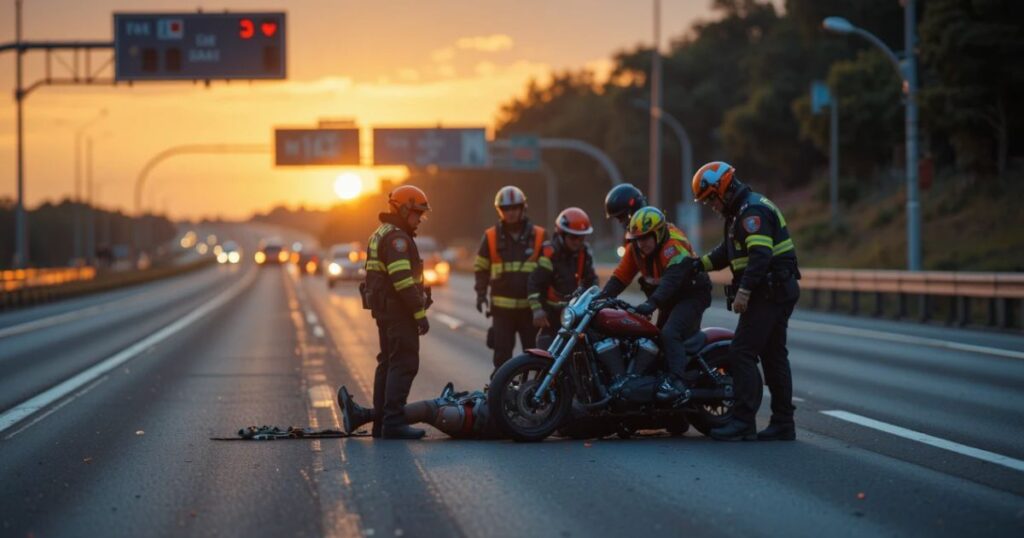
Motorcycles symbolize freedom, speed, and independence. Riders enjoy the open road, the sound of the engine, and the sense of control that cars rarely provide. Yet behind that freedom lies a hard truth. Motorcycle death statistics consistently show that riding carries a much higher risk than driving a car. This leads many people to ask a serious question: what percent of motorcycle accidents result in injury or death?
In the United States, motorcycles make up only a small fraction of registered vehicles, yet they account for a disproportionate number of traffic-related deaths. Understanding the real numbers helps riders, families, and policymakers see the danger clearly. This article explores motorcycle accident statistics nationwide, explains why crashes turn deadly, and breaks down how injuries, deaths, and survival rates compare to cars.
Quick Answer: Motorcycle Accident Injury & Death Percentage (TL;DR)
Here is the short and direct answer many readers look for. Around 80 percent of motorcycle crashes result in injury or death. That means only about two out of ten riders walk away unharmed. Within that group, roughly 14 percent of crashes end in death, shaping the national motorcycle fatality percentage.
This data comes from the National Highway Traffic Safety Administration (NHTSA), which tracks vehicle miles traveled and calculates the fatality rate per 100 million miles. Compared to cars, the motorcycle accident mortality rate is dramatically higher, making this one of the most dangerous forms of road travel in America.
How Common Are Motorcycle Accidents in the United States?
Motorcycles represent roughly three percent of all registered vehicles in the U.S. Despite this small share, motorcycle crashes occur tens of thousands of times each year. According to federal reports, more than 80,000 riders suffer injuries annually, and thousands lose their lives.
These figures explain the growing concern around how dangerous are motorcycle accidents. The probability of motorcycle accident outcomes rises because riders lack the physical protection found in passenger vehicles. When crashes happen, injuries are far more likely to be severe.
What Percentage of Motorcycle Accidents Result in Injury?
The motorcycle accident injury rate remains alarmingly high. Roughly four out of five crashes lead to injury, ranging from minor cuts to life-threatening injuries. Even low-speed incidents often result in broken bones or deep abrasions.
Medical professionals regularly treat head trauma, spinal injuries, and internal injuries after a bad motorcycle accident. Because riders absorb most of the impact, injuries escalate quickly. This explains why injuries and deaths from motorcycle collisions are primarily from direct contact with pavement or other vehicles.
What Percentage of Motorcycle Accidents Result in Death?
When focusing only on fatalities, the numbers remain sobering. About 14 percent of motorcycle crashes result in death, answering what percentage of motorcycle crashes cause death in clear terms. This percentage defines the national motorcycle accident death ratio.
The motorcycle rider death rate is far higher than that of car occupants. Measured per mile traveled, motorcycles record more than 30 deaths per 100 million miles, while cars average just over one. These motorcycle crash death statistics reveal how often motorcycle accidents are fatal in everyday riding conditions.
Motorcycle Accident Injury vs Death Rates Compared to Cars
The motorcycle accident risk compared to cars becomes clearer when looking at side-by-side data. Cars provide steel frames, airbags, seatbelts, and crumple zones. Motorcycles offer none of these protections.
Below is a simplified comparison based on motorcycle vs car accident death risk data from federal safety agencies.
| Vehicle Type | Fatality Rate per 100M Miles | Relative Risk |
| Motorcycles | 30+ deaths | Extremely High |
| Cars | ~1.1 deaths | Low |
This table explains why are motorcycle accidents more deadly than car accidents is not even a debate. The motorcycle vs car crash statistics consistently show a massive safety gap.
Why Are Motorcycle Accidents More Dangerous Than Car Accidents?
The main reason is exposure. Riders experience ejection from motorcycle events during crashes, often followed by secondary impact injuries. Even a small collision can throw a rider into traffic, barriers, or roadside objects.
Another major factor involves visibility issues. Drivers frequently fail to notice motorcycles at intersections, leading to deadly intersection crashes. Add distracted driving, speeding, and poor weather, and the answer to what makes motorcycle accidents fatal becomes clear.
Most Common Injuries in Motorcycle Accidents
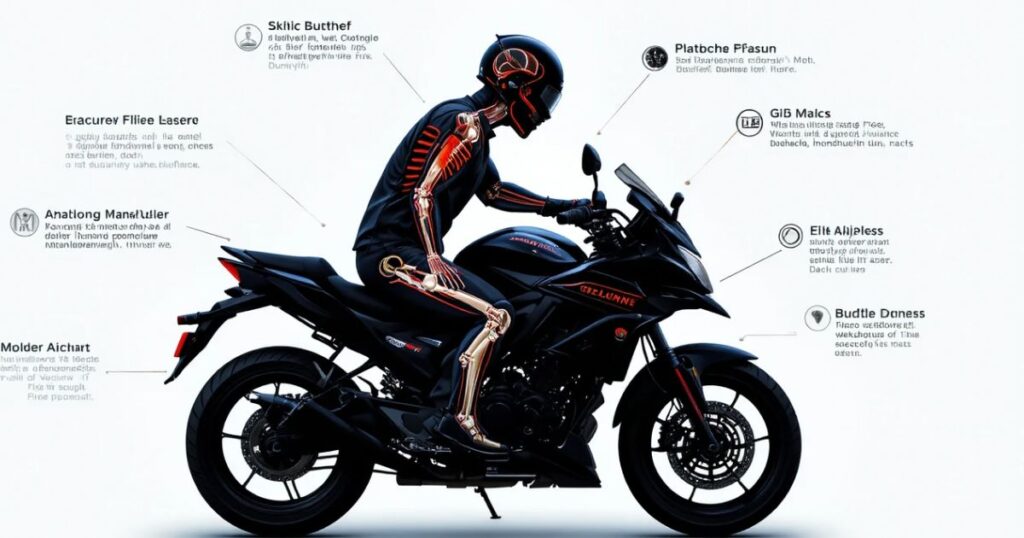
Emergency departments across the U.S. see the same injury patterns repeatedly. Severe injuries often include traumatic brain injuries, crushed limbs, and spinal damage. These injuries can permanently alter a person’s life.
Road rash, fractures, and internal bleeding also appear frequently. Many survivors face long rehabilitation periods, chronic pain, or disability. These outcomes shape the broader picture of motorcycle accident survival rate beyond simple fatality numbers.
Leading Causes of Fatal Motorcycle Accidents
Speeding tops the list of causes behind fatal motorcycle accidents. Speeding motorcycle crashes reduce reaction time and multiply impact force. Alcohol use also contributes significantly to deadly outcomes.
Another major cause involves collisions where a car turns left in front of a motorcycle. These car and motorcycle accidents happen quickly and often leave riders with no chance to avoid impact. This explains why do motorcyclists die more often in crashes involving other vehicles.
Risk Factors That Increase Injury or Death in Motorcycle Crashes
Several risk factors raise the odds of dying in motorcycle accident scenarios. Riding at night reduces visibility. Poor weather lowers traction. Rural roads encourage higher speeds and delay emergency care.
Inexperience also plays a role. New riders face higher odds of being in a motorcycle accident, especially when asking, is it hard to ride a motorbike safely without training. These factors combine to increase fatal outcomes nationwide.
How Helmet Use Changes Survival Rates in Motorcycle Accidents
One decision dramatically changes outcomes: wearing a helmet. Studies show helmet use reduces the risk of death by about 37 percent and cuts serious head injuries by nearly 70 percent. States with strict helmet laws consistently report fewer fatalities.
Advanced motorcycle safety equipment, such as airbag-equipped vests and reinforced protective gear, further improves survival rates. These tools directly answer does wearing a helmet reduce motorcycle deaths with clear evidence.
Does Speed Increase the Chance of Death in Motorcycle Accidents?
Speed magnifies every mistake. As velocity rises, stopping distance increases, and crash forces become lethal. Many high-speed accidents leave riders with no chance of survival.
Data confirms that how fast do motorcycle accidents become fatal depends on speed, environment, and protective gear. Even skilled riders face rising chances of dying in motorcycle crash situations once speeds exceed limits.
Single-Vehicle vs Multi-Vehicle Motorcycle Accidents
Single-vehicle crashes often involve curves, gravel, or obstacles. These incidents may seem minor, yet they can still cause death. Multi-vehicle crashes, however, account for a larger share of fatalities.
In these cases, driver error, visibility problems, and misjudgment dominate. Motorcycle crash fatality data shows that interactions with cars dramatically increase death risk.
Motorcycle Accident Death Rates by Age & Experience

Age influences outcomes in different ways. Younger riders crash more often, while older riders suffer worse injuries. Reaction time, physical resilience, and risk behavior all play roles.
Experience lowers risk significantly. Trained riders make better decisions, improving overall motorcycle accident survival rate compared to beginners.
State-Wise Motorcycle Fatality Trends (High-Risk States)
Geography matters. Warm-weather states see more riding days and higher death counts. California, Florida, and Texas often rank high in motorcycle death statistics.
The California Office of Traffic Safety reports year-over-year increases linked to congestion and speed. Helmet enforcement, urban density, and tourism influence nationwide motorcycle accident data.
Source: https://www.ots.ca.gov
What To Do Immediately After a Serious Motorcycle Accident
After a moto accident, safety comes first. Even if pain feels manageable, medical evaluation matters. Many internal injuries worsen hours later.
Documenting the scene helps protect your rights. Photos, witness details, and medical records support future motorcycle accident claims and potential compensation after accident.
Medical Costs & Long-Term Impact of Motorcycle Accident Injuries

Medical costs following crashes often shock families. Emergency surgery, hospital stays, and rehabilitation can exceed hundreds of thousands of dollars. Long-term care for paralysis or brain injury costs even more.
Beyond finances, emotional damage remains. Chronic pain, mobility loss, and career disruption define many fatal motorcycle crash consequences for survivors.
Can You Claim Compensation After a Motorcycle Accident Injury?
When negligence causes harm, injured riders may pursue personal injury claims. Compensation may cover medical bills, lost income, and pain.
Understanding liability strengthens outcomes. Early legal guidance improves results in motorcycle accident claims across the U.S.
Wrongful Death Claims After Fatal Motorcycle Accidents
Families facing wrongful death endure both grief and financial loss. Claims seek justice after a fatal crash caused by negligence.
These cases address funeral expenses, lost support, and accountability. They acknowledge the lasting impact of the loss of a loved one.
How a Motorcycle Accident Lawyer Can Help After a Crash

Legal professionals help investigate crashes, gather evidence, and handle insurers. Their role becomes vital when injuries are severe or death occurs.
Support reduces stress while pursuing fair outcomes. Strong representation matters when accidents permanently change lives.
Frequently Asked Questions
What percent of motorcycle accidents result in injury or death?
About 80 percent result in injury, and roughly 14 percent end in death. This clearly answers what percent of motorcycle accidents result in injury or death.
Are motorcycle accidents more deadly than car accidents?
Yes. The motorcycle vs car accident death risk is many times higher per mile traveled.
What is a major cause of death in motorcycle accidents?
Speeding, alcohol use, and left-turn collisions remain the leading causes nationwide.
Are dirt bikes dangerous compared to street motorcycles?
Yes. Off-road riding reduces traffic risk but increases crash and injury risk due to terrain and lack of protection.
What is the death rate on a motorcycle?
The motorcycle death rate is about 30 deaths per 100 million vehicle miles traveled, making motorcyclists nearly 28 times more likely to die in a crash than car occupants, according to U.S. traffic safety data.
What is the most common cause of death on a motorcycle?
The most common cause of motorcycle death is high-speed collisions, often combined with speeding, alcohol use, or failure of other drivers to see the rider at intersections.
What is the most common injury in a motorcycle accident?
Head injuries and traumatic brain injuries are the most common and severe injuries in motorcycle accidents, especially when riders are not wearing helmets.
What type of motorcycle has the most fatalities?
Sport motorcycles account for the highest number of fatalities due to their high speeds, powerful engines, and aggressive riding positions, which increase crash severity.
Is a motorcycle worth the risk?
A motorcycle can be worth the risk for some riders, but statistically, it is far more dangerous than driving a car. Proper training, helmet use, and safe riding habits significantly reduce—but do not eliminate—the risk.
Final Thoughts
Motorcycles offer freedom, yet the risks are real and measurable. Understanding what percent of motorcycle accidents result in injury or death allows riders and families to make informed decisions. Knowledge, training, and safety equipment save lives. Every mile ridden with awareness reduces the odds written into national statistics.
Disclaimer
This article is published for informational and educational purposes only. It is not intended to provide legal, medical, or professional advice. The information shared here is based on publicly available data, research, and general motorcycle safety statistics in the United States. Laws, statistics, and safety recommendations may change over time, and individual situations can vary.
Readers should not rely on this content as a substitute for advice from qualified professionals. Always consult licensed medical providers, safety experts, or legal professionals for guidance specific to your situation.
This informational blog is authored by Muhammad Maaz. All opinions expressed are solely for educational awareness and do not represent any government agency or legal authority.
Common Hand and Wrist Injuries from Motorcycle Accidents

Common hand and wrist injuries from motorcycle accidents are among the most frequently treated injuries in emergency rooms across the United States. When a motorcycle crash occurs, riders are often thrown from the bike, and the hands and wrists absorb the initial impact as the rider instinctively tries to brace the fall. This natural reaction…
Neck and Back Injuries From Motorcycle Accidents: Causes, Symptoms, Treatment & Legal Rights
Motorcycle riding gives freedom, speed, and independence, but it also places riders among the most vulnerable road users in the United States. When a crash occurs, the human body absorbs the full force of the impact. Because there is no protective metal frame, motorcycle crash injuries often affect the most delicate and essential parts of…
Shoulder Injury From Motorcycle Accident: Types, Treatment, Recovery & Legal Options
A shoulder injury from motorcycle accident incidents can change everything in a split second. Motorcycles offer speed and freedom, but they provide almost no protection when a crash happens. In the United States, ER doctors treating motorcycle injuries frequently see riders brought in with severe shoulder damage. The shoulder often takes the first and hardest…



Muhammad Maaz, founder of InjuyCrashGuide.com — sharing simple, real-life accident and insurance guidance to help people stay informed and protected.